


Archive for the 'outdoor living' Category

Outdoor Fireplace Stops the Fall Chill

Thursday, September 15th, 2011

roasting marshmallows Outdoor Fireplace Stops the Fall Chill

As the season changes from summer to autumn, thoughts may turn to the warmth and comfort of a roaring fire, especially if an evening chill sends you inside sooner than you’d like!

You can comfortably extend your outdoor living deep into fall and early winter if there is a heat source. This is why fire pits, fireplaces and chimneas are a popular deck or patio accessory. The added benefit is a place to cook (from simply roasting marshmallows to baking pizza) and a comforting light source that lends romanticism to any occasion.

tabletop firepit Outdoor Fireplace Stops the Fall Chill

A simple solution for outdoor warmth and light is a tabletop fire pit, which typically lights with a clean-burning gel fuel.

chiminea Outdoor Fireplace Stops the Fall Chill

To cover a much larger area, you have portable options such as a chimnea (above) or fire bowl (below). The chimnea is reminiscent of a potbelly stove, and allows a fire to light quickly and burn longer than a traditional fireplace while keeping smoke out of your eyes. The design also protects against rain extinguishing the flame.

portable fire pit Outdoor Fireplace Stops the Fall Chill

Fire bowls come in a wide variety of styles and sizes, so are easily adaptable to most outdoor situations. Add a grate over the top and it can be used for cooking; select a model with wheels and it can be moved to wherever the party is; outfit it with a mesh screen cover to reduce pops and sparks.

It is important to read and follow the manufacturer’s instructions on how to use and place your fire pit. For instance, placing a fire pit near buildings, trees or overhanging rooflines should be avoided. So please read the directions and observe the same safety precautions you would for an open campfire.

builtin fire pit Outdoor Fireplace Stops the Fall Chill

A fire pit can also be designed and built as a permanent fixture of your patio area. They can be constructed of stone, brick or concrete and can serve both warmth and cooking functions.

outdoor fireplace Outdoor Fireplace Stops the Fall Chill

A traditional fireplace with chimney is the grand option for outdoor entertaining all year long, but there need not be anything traditional about the way it looks or functions. For structural integrity and adherence to safety codes, installing an outdoor fireplace is best done by licensed designers and builders, who can help you with endless options, like:

• Wood or gas burning – or both?
• Stone, concrete, brick – or a little of each?
• For cooking, baking, warmth – or all that?

With a portable fire pit or fire bowl, you can purchase one today and be ready for the first cold night. If you’re desiring something more permanent or elaborate, you can turn to the design and construction team at Mosby Building Arts for all the help you need. Click for a portfolio of their outdoor living projects in Metropolitan St. Louis. To begin enjoying the great outdoors through the fall and winter, call Mosby at 314.909.1800 or contact them here.


Create Your Perfect Screen Porch

Thursday, August 18th, 2011

1697 Create Your Perfect Screen Porch

Would you love to be outdoors in a dry, shady place free of flying and biting insects? If this sounds heavenly, then you may want to consider a screen porch addition to your home.  See more photos of the project shown above.

A screen porch is essentially an enclosed structure with a roof and screened walls. It can be built as an addition to your home or as free-standing structure. They can also be built atop an existing patio or deck, or an existing porch can be altered to add screens.

A screened-in room extends your living space to the outdoors, and can be outfitted with furniture and lighting for use any time of day. By including electrical outlets into the scope of work, you can increase its usefulness for work or play by including a desk for a laptop or installing a wall-mounted flat-panel TV.

1481 Create Your Perfect Screen PorchSee more photos of this free-standing screen porch.

Because these spaces have roofs, they naturally provide a shady respite. But what makes them usable during the warmer months of the year is a ceiling fan which circulates air and keeps the room cooler than the outdoor temperature. If you’d like to use the screen porch into the cooler fall months, they can also be designed to accommodate a fireplace or firepit.

When designing a screened-in room, consider how it would serve you best. If you’d like an outdoor place for family and friends to gather, placing it as an addition off the family room makes sense. If alfresco dining is a priority, placing it off the kitchen is logical and efficient. If private solitude is the desire, an addition off your master suite is a great luxury.

The next planning step is deciding what type of furniture and accessories will be in it. This assures the room is the proper size for its intended function, plus allows room to move around in and through the space.

1388 Create Your Perfect Screen PorchSee more photos of this poolside screen porch.

Another key consideration is making the interior water-proof because the room is exposed to the elements. Choose surface materials that are water-friendly (for example, standard decking woods), and that upholstered furniture or window treatments are of outdoor-grade fabrics. Because outdoor living is so popular, there is a wide array of styles to choose from, and even audio/visual manufacturers make water-proof models for just this purpose.

A screen porch can greatly enhance your outdoor lifestyle, and can substantially improve the value of your home when done right. For maximum structural integrity, beauty and function, work with the designers and builders at Mosby Building Arts, who have deep experience in creating outdoor rooms that last a lifetime. To have your perfect screened-in room, call the Mosby office at 314.909.1800 or contact theme here.

Differences Between Sun & Screen Rooms

Thursday, August 11th, 2011

sun room after Differences Between Sun & Screen Rooms

For an addition to the home with abundant windows that puts you closer to the outdoors, the terms sun room and screen room (or screened-in porch) are used interchangeably. But in terms of how they are constructed and can be used, they are very different.

A screened-in room has no glass windows, only screens in the wall openings, meaning it is fully open to the elements all the time. When a room has glass window units, it becomes a sun room.

The presence or absence of windows makes a huge difference in how the addition is constructed. A sun room is built to withstand and resist wind pressure, while a screen room is designed for wind to pass through it. For the homeowner, there is no difference in structural integrity between the two, but rather a difference in engineering, and the size and placement of openings in the walls.

Windows or screens also make a difference in how and when the room can be used. A screened porch may be uninhabitable during a blowing rain, and extreme heat or cold because it is open to the elements. With a sun room, the presence of windows protects against rain, but is still susceptible to extreme heat or cold. But there is one cold-weather advantage for the sunroom: if insulated properly, a space heater can keep you comfortable in the room in winter. This is why they are often referred to as 3-Season Rooms.

screen porch1 Differences Between Sun & Screen Rooms

A screen porch needs to take water into consideration, since rain or melting snow can come inside. It’s important to choose a water-friendly floor covering like standard decking materials. Carpeting would not be a good choice because it’s not meant to get wet. Because a sunroom can be closed off from the weather, you have a wider range of finishes to choose from.

The one thing that sun and screen rooms have in common is the absence of central heating and cooling. Even when attached to your home, they are considered an isolated environment because the temperature is not controlled by an HVAC system. While ceiling fans are a wise investment for these spaces, there are many times in the year when their temperature will vary greatly from the rest of your home, so having a way to close off the room from the environmentally-controlled part of your home is crucial.

If you are considering adding a sun room or screen porch to your home, let the designers and builders at Mosby Building Arts walk you through your options. They not only make beautiful rooms that last a lifetime, but know how to convert a screen porch to a sun room. Here is an example of just such a project.

Here is a portfolio of some of Mosby’s sun and screen room projects. For your own back-to-nature space, call the Mosby office at 314.909.1800 or contact them here.

How to Create Your Perfect Patio

Thursday, June 9th, 2011

01 patio design How to Create Your Perfect Patio

The dictionary definition for patio is “an outdoor space for dining or recreation that adjoins a residence.” This basic understanding is needed because there are no boundaries when it comes to patio designs, but it all begins with a foundation for outdoor living.

02 patio design How to Create Your Perfect Patio

Form Follows Function

The first step in patio design is understanding what you want to accomplish. Do you only require a spot big enough for a table, chairs and BBQ grill for occasional outdoor dinners with those in your home? Or do you spend a large part of the summer entertaining large groups of people in your backyard? Or do you desire a quiet, shady spot for only you to get lost in a good book? Or do you want a patio wonderland that can do all of these things?  Knowing the patio’s function helps create the form.

03 patio design How to Create Your Perfect Patio

Where to Place It

Once you know your outdoor living goals, where to place the patio comes next. Pay attention to the sun and wind patterns in your backyard so they work to your advantage. For instance, if the time of day you would use the patio most is also when it’s sunniest, some form of patio cover could be a key part of the layout.

Also consider the scenery around the proposed patio. Is there already a focal point like gardens or woods that you’d like to gaze upon? If so, then orient the patio to lead the eye there. If the views beyond aren’t so great, the layout can incorporate privacy borders (such as fences or landscaping) to block views, and the focal point can become something like a water fountain or an outdoor kitchen.

04 patio design How to Create Your Perfect Patio

What Size Should It Be

The area that’s been determined as the best place to put a patio will also determine its size. If you have a large backyard, a rambling outdoor living room with multiple levels, seating and activity areas can be yours.  If, instead, you have a small courtyard or side yard area, then an intimate alfresco dining area would be ideal.

While a large area gives you a large list of options to incorporate, a small area does not necessarily limit your options; some of the very best design ideas come about because of limitations. For example, a 6-foot patio can center around a fire pit and be edged with half walls that also work as bench seating.

05 patio design How to Create Your Perfect Patio

What Features Are Desired

A simple slab of poured and stamped concrete outside your backdoor can be a straightforward plan. But if a gas grill, water feature or lighting is part of the design, provisions must be made for running and installing the appropriate utility lines. Installation of utility lines can also change the layout; for running water in an outdoor kitchen, it may be more advantageous to site it closer to the house to reduce the cost of plumbing lines.

06 patio design How to Create Your Perfect Patio

What Should It Look Like

When following the steps listed above, you will know the function, siting, size and features. The final step is what does it look like and what is it made of?

Here’s a quick primer on patio material choices.

At this point, designing your patio is exactly like designing a room in your house. You will consider materials, furniture, appliances, lighting and landscaping. A construction budget and schedule can now also happen. In essence, you are creating an outdoor room that – in the Metro St. Louis area – can easily be used 9 months out of the year, so all of this planning will result in a patio project done right the first time.

Because there are so many details that go into creating your perfect patio, you will benefit from working a design-build firm like Mosby Building Arts, who have Consultants, Planners and Carpenters under one roof. Browse their portfolio of outdoor living projects for inspiration, and begin your project by calling the Mosby office at 314.909.1800 or contact them here.

Choosing Patio Materials & Finishes

Thursday, June 2nd, 2011

01 pretty patio Choosing Patio Materials & Finishes

Whether you’re contemplating a new patio installation or upgrading the appearance of an existing one, it’s important to consider what type of patio materials and finishes will work best for you.

The cost of the patio material is only one consideration. Maintenance will be an on-going concern, which includes both the time you’re willing to dedicate and the expense of the maintenance. You may find that choosing a more durable patio material with less long-term care a much better up-front value than choosing a more cost-effective material that will not last as long and requires more of your maintenance time. Here is a summary of your choices:

Poured Concrete

A poured concrete patio is both affordable and easy to maintain. It also allows you to work in stages if you’d like an upgrade in the future because you can sometimes lay new materials over it.

02 stamped concrete Choosing Patio Materials & Finishes

Concrete offers many design options, as well. At the time it’s poured, it can be stamped or molded to replicate just about any look (brick, cut stone, cobblestone, etc.), or dyed to any color you like, or have a textured finish. All 3 of these options can happen at one time – let your imagination run wild! These cosmetic upgrades do not weaken concrete’s structural integrity but does change the project price.

Long-term maintenance for poured concrete can entail patching cracks due to the ground under the slab shifting or the expansion and contraction caused by the cycle of freezing and thawing common in the Midwest.

Pavers

Interlocking pieces of pre-cast concrete or clay (also known as brick) are called pavers or paving stones. They are installed over a compacted stone or sand base, or can be laid over many existing concrete slabs. The types of pavers to choose from include brick, concrete, natural stone and tile pavers.

03 brick pavers Choosing Patio Materials & Finishes

Brick or Concrete Pavers

Clay or brick pavers are a popular choice because they are easy to install, making them a Do-It-Yourself project. The pavers can be installed over sand or concrete bases without mortar, laid in an endless variety of patterns, and are durable in very cold climates.

If a paver goes bad, it is very easy to remove and replace the trouble spot. There is minimal maintenance to the pavers themselves, but weeds or grass growing up between them can be a maintenance issue.

04 stone paver Choosing Patio Materials & Finishes

Natural Stone Pavers

Flagstone, fieldstone and limestone are some of the most commonly used natural stone pavers. They are the most durable of all materials available, and do require skilled stone masons to piece together irregular stones and mortar them in place. This usually makes it an expensive choice upfront, but it lasts a long-time.

Natural stone veneer is a thinner and lighter version of full stones, so comes down in price a bit. It is recommended they be installed by skilled stonemasons.

On-going maintenance to natural stone pavers would be regularly sweeping and hosing down the stone surface to keep it free of garden debris. When properly laid, weeds do not grow up through stone pavers; instead, seeds atop the stone can take root in the porous stone.

05 Outdoor Patio Tile Choosing Patio Materials & Finishes

Tile Pavers

For a slightly more formal look, exterior-grade quarry or terra-cotta tiles are a great choice. You can have the look of stone without the additional expense of the labor involved in shaping and cutting natural stone.

To get the results you expect, go with a company knowledgeable about installing and mortaring them properly. And choose unglazed styles to avoid slipping on a slick surface when they get wet.  Tiles can crack if heavy objects are dropped on them, but a skilled professional should be able to replace only a broken piece.

Maintenance issues include sweeping and hosing down the tiles on a regular basis, and the possibility of re-grouting in the future due to weather-related deterioration.

06 mixed materials Choosing Patio Materials & Finishes

Your patio can be a combination of any of the above options. For example, a poured concrete patio can be edged with natural stone, or mix brick pavers with natural stone. This gives you endless design variety along with project budget flexibility.

To protect your patio investment, be sure to seal all concrete, brick and natural stone, as well as the expansion joints and grouting. Sealer prevents water from constantly penetrating the material, and helps it withstand the Midwest freeze/thaw cycles. Sealing also reduces staining on the surface, as well as making snow and ice easier to remove.

For help in choosing which type of patio works best for you, team with a Mosby Home Consultant who is well-versed in the installation, maintenance and cost of patio materials. Mosby Building Arts has two generations of skilled stonemasons on staff plus an expert sealing team, so you can be assured that from patio design to installation, you’re making the right choices that will last a lifetime. Call the Mosby office at 314.909.1800 or contact them here.

Plan Now for an Outdoor Kitchen

Thursday, March 10th, 2011

outdoor kitchen Plan Now for an Outdoor Kitchen

As winter fades into spring, the longing to be outdoors grows stronger. Grilling and dining alfresco in your backyard for the first time since last fall is always a special treat, a sure sign that warmer weather is on the way. This can also conjure dreams of your own outdoor kitchen, something a little more formal than wheeling out the BBQ pit.

If you would like to realize your dream of an outdoor kitchen, it’s never too late to begin planning the design and construction of the project.  Here are some necessary steps to keep in mind before you begin:

Step 1 Work with a certified kitchen designer and professional planners to explore what kind of kitchen and entertainment area will work best for your needs and your backyard.

outdoor kitchen drawing Plan Now for an Outdoor Kitchen

Step 2 Survey the proposed project area and analyze how water and electricity will power the new kitchen, how waste water will drain away from the site, and how to place the pieces to maximize shade and ventilation.

Step 3 Compile design, site and mechanical details to create a preliminary budget, drawings and construction schedule for your review. It’s important to have a detailed scope of work in place so that everyone understands the plan before the first shovel hits dirt.

Step 4 Shop for the materials that comprise your outdoor kitchen, including countertops, appliances, light fixtures and cabinetry. The prices of your selections are added to the estimates coming in from subcontractors who have also reviewed the project. All this new data determines the final budget amount for the project.

Step 5 Finalize all selections, drawings and schedules. After a detailed construction agreement is signed, work beings on the site.

Step 6 Watch as all the plans come to life. You should be available for regular meetings with the project manager to go over weekly progress and answer any questions that may arise.

Step 7 Walk through the project with your designer and project manager once the project is complete. This is where you become familiar with the care and winter maintenance of all your new appliances, and receive the warranty binder with complete information about your project.

Step 8 Now it’s time to throw a big BBQ to christen your new kitchen!

The Planning & Design and Construction team at Mosby Building Arts excel at designing and building outdoor kitchens. To get your creative juices flowing, read this guide on everything you need to consider when planning an outdoor kitchen, or click to see Mosby photos of a pool-side kitchen project.

Good timing is the key to outdoor living projects, and working with Mosby professionals assures you will have the time of your life in your own backyard this year! To begin your outdoor kitchen, call the Mosby office at 314.909.1800 or contact them here.

Improve Your Outdoor Lighting

Thursday, October 21st, 2010

With fall underway, it gets dark earlier every day leading up to Daylight Savings Time on the first weekend of November. Along with Trick or Treaters coming to the door, now is the perfect time to think about the outdoor lighting around your home.

There are four aspects of outdoor lighting to consider:

01 mosby outdoor light Improve Your Outdoor Lighting

SAFETY

Avoid tripping and falling accidents for you and guests by lighting all the areas people use. All stairs, walkways and the driveway need constant, low-level illumination so you are sure of your steps. If safety lights are too bright or shining up into the face, it creates a glare that can be just as dangerous as no light at all. And all entries of your home – front, back and side – need a constant light that allows you to see and to feel welcomed into the home.

02 mosby outdoor light Improve Your Outdoor Lighting

SECURITY

It is understood that well-lighted areas keep crime away, so use a mixture of steady dusk-to-dawn lighting (like a lamp post on the lawn and porch lighting) as well as motion detector lighting around the exterior of your home.

Security lighting should not be too bright, as strong lighting in a specific area increases the darkness elsewhere, creating convenient hiding places for vandals. And for your safety, control the glare and intensity with down-facing, shielded lighting of medium intensity.

Dusk to dawn and motion activated lighting is a good idea, but Hi/Lo Motion Activated lighting improves on these concepts. Specified lights stay on continuously but at a low level, and when movement is detected, that light amplifies.  And place these motion detector lights so you can see them from indoors and be aware of when they pop on.

03 mosby outdoor light Improve Your Outdoor Lighting

AESTHETIC

Instantly increase the curb appeal of your home at night with special lighting that plays up significant features of your home. Place lights under favorite shrubs or trees for the drama of their shadows against the home. You can also accent architecturally pleasing points of the home like columns, keystones, or bay windows.

For your outdoor entertaining areas, avoid harsh, overhead lights that attract bugs and make it hard to see others. Opt for table lighting, strands of colored lights strung through trees or across the deck railings, or soft light outdoor light pendants or globes. And take advantage of the allure and flattering light of outdoor fireplaces or fire pits, which also come in handy during the cold autumn nights.

04 mosby outdoor light Improve Your Outdoor Lighting

TYPES OF LIGHT

Americans are moving away from traditional incandescent and halogen lighting because the long lifespan and energy savings of compact fluorescent light bulbs (CFLs) is undeniable.

Another energy-saving choice is LED lighting, which have the same lifespan and energy savings as CFLs, but with some additional benefits. LEDs do not heat up, increasing safety and – in the case of uplighting among landscaping and greenery – eliminating fire hazards. Because LEDs are manufactured as a solid piece with no glass or filament to break, they are resistant to shock, vibration and impact. And they dim as they begin to lose power, which gives you a heads up that it’s time to replace them rather than suddenly losing light.

The necessity and beauty of outdoor lighting is apparent, but it also encompasses many layers of detail. Work with the architects and planners at Mosby Building Arts on the lighting design that’s right for your needs, and they will install them for you, too. Call the Mosby office at 314.909.1800 or contact them here.

All About Outdoor Kitchens

Thursday, May 6th, 2010

01 mosby outdoor kitchen All About Outdoor Kitchens

When you want to expand your outdoor cooking beyond wheeling out the Weber, an outdoor kitchen awaits you. This remodeling project can be as simple as a grill and dining table on a concrete patio, or you can create an outdoor room with a full kitchen and a full suite of furnishings for lounging and dining. Outdoor living options are endless, so let’s consider the following areas that help determine what type of outdoor kitchen would satisfy your vision.

Creating An Outdoor Kitchen

Do you need a simple cooking area or a full kitchen? A grill and counter space are the essentials of outdoor cooking, while a refrigerator and sink make it a regulation kitchen. Adding these fixtures requires adding water and electrical hookups, and it can boost your home’s value because you’ve created a second kitchen. So, consider how long you will be in your home, and let then let your cooking and entertaining desires frame the scope of your outdoor kitchen.

02 mosby outdoor kitchen All About Outdoor Kitchens

Cooking Preparing meals for family and friends is the basis of an outdoor kitchen, and choices include gas or charcoal grill, or would you like a wood-burning pizza oven with a separate stove top? Should the cooking fixtures be portable or permanent? If you want an outdoor kitchen that can be rearranged or taken with you to a new home, choose a grill on wheels. If you desire is to enjoy the kitchen for years to come, then go with built-in appliances just as you would for an indoor kitchen.

03 mosby outdoor kitchen All About Outdoor Kitchens

Prep Area Preparing food and storing cooking utensils informs outdoor kitchen design. A simple countertop with drawers and shelves underneath may be all that’s required. For the gourmand, the plan may have the same items as the indoor kitchen: refrigerator, wine chiller, warming drawer, double sinks and plenty of countertop for multiple cooks working together. How you wish to cook and entertain is how simple or extensive the kitchen could be.

04 mosby outdoor kitchen All About Outdoor Kitchens

Weather-Friendly Materials Everything needs to be waterproof and low maintenance, so the materials that fill this requirement are stainless steel, enamel, red woods and teak, stone veneers, concrete and brick. For flooring, avoid slick materials like glazed ceramic tile or marble to reduce slipping, and  choose countertop materials that are durable and easy to clean, like concrete, which can be cleaned with the garden hose.

Construction An outdoor kitchen is, essentially, an outdoor room, so professional remodelers consider this project a room addition. Typically, building an outdoor room won’t disrupt household routines, which can make it a pleasurable project to undertake. This is a significant home improvement, so it is important to build to local zoning codes, follow proper building methods and obtain proper building permits. Use licensed plumbers and electricians so the space is up to code.

05 mosby outdoor kitchen All About Outdoor Kitchens

The kitchen can be built on an existing patio if it is in good condition and take the extra weight and use. Existing decks can also be used, but may require additional support because of the extra weight being added. Whether expanding what exists or starting from scratch, ensure that areas directly underneath grills and stoves can withstand high heat and sparks from embers that fall.

Another consideration is how many months out of the year you want to use the space. The outdoor cooking season extends into deep fall with the inclusion of gas patio heaters or a fireplace, and a gazebo or other shelter can buffer the elements.

Placement An important decision is where to place the kitchen. Placing it on level ground near existing utilities is ideal. Placing it off to the side of the yard is better than smack dab in the center, as it provides more privacy and can improve a spot in the yard that needed attention, anyway. What views you want to capture is an aesthetic consideration, as well.

06 mosby outdoor kitchen1 All About Outdoor Kitchens

An attached kitchen let’s your home’s exterior wall act as a weather buffer, and makes it easy to tap into the kitchen’s existing utilities. Ventilation for an attached kitchen is very important, as smoke-producing appliances must either be out from under roof eaves or have an exhaust system to avoid trapped smoke.

07 mosby outdoor kitchen All About Outdoor Kitchens

Freestanding kitchens give you more leeway with layout, space and style. For instance, most outdoor entertaining takes place in the late afternoon and early evening, so locating the area in a northern area will provide natural shade that keeps everyone cooler. Erecting a pergola, gazebo or pavilion nicely defines space and provides ample shade and protection. Wind and the elements are another key consideration; landscaping can be employed as a windbreak on the perimeter of the space.

08 mosby outdoor kitchen All About Outdoor Kitchens

Layout The floorplan of an outdoor kitchen follows the same principals as the indoor version. Consider the configuration and spacing of work zones for how many cooks will be attending, and allow for enough foot traffic around the cooking areas to avoid accidents.

People can gather at a counter with bar height seating to watch you cook and keep you a part of the party, or you can create separate areas for entertainment, lounging and dining. These decisions form the basis of what furniture and fixtures are needed to complete your vision. And remember to place seating so that smoke blows away from guests!

From the simple to the elaborate, an outdoor kitchen requires much coordinating and thought. The Mosby Building Arts planners and designers make it easy for you and excel at working with you to create the ultimate outdoor living experience, and the Mosby carpenters will bring these visions to life. Browse examples of Mosby outdoor living projects that have improved the homeowners’ lifestyle, and when you’re ready for your own backyard oasis, call the Mosby office at 314.909.1800 or contact them here.

The Beauty of 50-Plus Living

Tuesday, April 20th, 2010

01 mosby 50 plus living The Beauty of 50 Plus Living

For those in their Golden Years, a common concern is the seemingly inevitable life transition of leaving your longtime home for a retirement community. Add to this major dilemma an unsure housing economy, and the concern becomes all the more perplexing.

What if you could turn your existing home into the ultimate version of the retirement villa you would envision? Would you stay in your home if it met all the wants and needs of your life?

A recent AARP survey found that over 80% of people over 60-years old desire to stay in their own homes for the rest of their lives, meaning they prefer to age in place. Typically, the aging process is blamed for many problems we encounter with daily activities, when, often, it is the home that creates the difficulties.

Homes geared to younger adults do not properly support the physical and sensory changes we experience as we age. With even minor aging changes, an insignificant home feature can have significant effects. For instance, a change in lighting can change how well you see in your own home.

50+ living is all about independent, barrier-free comfort and function.  Accessible design benefits all the generations of family and friends who come into your home, and it will be as beautiful and stylish as you desire.

Interior Accessible Design Success Story

A St. Louis County couple had been in the same home for decades.  They had raised a family there, and their children and grandchildren all lived nearby.  Nearing retirement, they realized that they wanted to stay in their own home within their community, and worked with Mosby Building Arts on planning their home for life.

Working with a Mosby Certified Aging In-Place (CAPS) designer, they reviewed current needs and future concerns and decided to make the master bathroom their first accessible design project because this where we tend to first notice changing capabilities.

02 mosby 50 plus living The Beauty of 50 Plus Living

To look at this bathroom, you would not immediately know that it’s accessible, but it certainly is.  The His & Hers bathroom vanities have single-lever faucet handles for ease of use, and are separated by a chair-height counter top with open space below.  This can accommodate a chair now or a wheelchair if needed in the future.

03 mosby 50 plus living The Beauty of 50 Plus Living

The toilet is of taller height than average which makes sitting down and getting up much easier, and a stylish grab bar to the right adds to the ease of use. The push-button control pad mounted to the vanity controls flushing, heating and lid functions.

04 mosby 50 plus living The Beauty of 50 Plus Living

The walk-in shower has a low-clearance threshold, multiple brushed, coordinated stainless grab bars, a handheld shower wand and a retractable teak wood bench mounted to the wall.

See more photos of this accessible bathroom project.

Exterior Accessible Design Success Story

05 mosby 50 plus living The Beauty of 50 Plus Living

A long-time Mosby Building Arts client is currently vibrant and active, but is thinking ahead by teaming with Mosby to create a long-term plan for her home. Mosby moved her laundry room from the basement to a new ground floor addition off the garage, and even built new, shallow steps for easier access from the garage to the house (above).

She is also a veteran gardener with a gorgeous backyard, so Mosby came up with designs to make her outdoor living just as accessible as indoors.  The Mosby CAPS team designed and built a new patio with a lightly textured concrete surface for better traction, and a screen porch with a zero-clearance entry from the patio so that a walker or wheelchair can pass with no difficulty.

06 mosby 50 plus living The Beauty of 50 Plus Living

Her favorite feature is the concrete ramp that leads from the patio down into the garden.  She already enjoys how convenient the lack of steps is, which highlights how so many accessible design features just make good sense for everyone who uses them.

See more photos of this accessible outdoor living project.

Other features that add mobility and beauty to outdoor living include increased lighting, raised flower planters and beds, raised height water spigots and wide sliding or French doors leading out to the area. When done properly, nothing looks out of the ordinary because it looks extraordinary.

Mosby Building Arts has three CAPS team members – including Scott Mosby who was the first national CAPS ambassador – who are certified and experienced at helping you live more comfortably in your home for life. To explore your accessible design options, call 314.909.1800 or contact Mosby here.

Extend Living Space with Decks & Patios

Thursday, April 15th, 2010

01 mosby deck and patio Extend Living Space with Decks & Patios

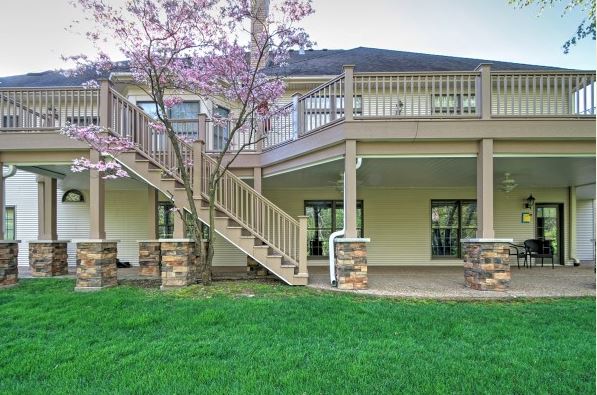
Would you like more room for living and entertaining?  Well, simply walk out your back door to see an untapped resource for extending your living space. Your back yard easily transforms into an outdoor living oasis with the addition of a deck or patio, so let the planning begin.

Decks and patios can easily incorporate gazebos, pergolas, pools, fountains and gardens…the options are limitless!  Which is why collaborating with design professionals is the best way to get an “outdoor room” that truly enhances your lifestyle and the value of your home.

When you work with a Mosby Building Arts design planner, dreams become reality by exploring the details on paper before the first hammer swings. Areas of consideration include:

Size Matters Picture how you’d like to live with a deck or patio; will it be a private space for your family to relax, or a place for entertaining large groups? Or would you like a flexible plan that can accommodate a combination of the two? Answers to these questions will determine how much furniture and square footage is needed.

02 mosby deck and patio Extend Living Space with Decks & Patios

Follow the Sun South-facing backyards need shaded areas on the deck, while a northfacing backyard may not require the awnings, pergolas or overhangs that create cool respite. Observing the sun, shade and wind will inform the overall design and function of the area.

Water & Light If you long to spend evening outside, you’ll need good lighting for safety, security and ambiance. Plan ahead for fixtures and electrical outlet needs. And install the proper number of outdoor faucets for watering gardens or a sink in an outdoor kitchen.

Maintenance & Durability You deserve to enjoy your outdoor room, not maintain it.  Work with a planner to choose the materials, finishes and sealers that protect your investment and leisure time.

03 mosby deck and patio Extend Living Space with Decks & Patios

Design Harmony An outdoor living space is an extension of your home, so it should enhance the exterior. Select materials, finishes and colors that coordinate with roofing, siding and windows. Consider the size, color and placement of landscaping around the patio. Mosby planners can keep an eye on the big picture so your new spaces harmoniously integrate with the whole.

Build It Right There are multiple structural and safety concerns when attaching a deck or patio to your home. Mosby carpenters apply for permits and build to the regulations of your municipality so you have a safe, watertight deck that serves  your family for decades.

Imagine your family room expanding into the backyard and realize the boundless potential for outdoor living.  To begin your backyard adventure and improve your warm-weather lifestyle, collaborate with the Mosby Building Arts planning and design team by calling 314.909.1800 or contact us here.

Join the Mosby E-Newsletter to get monthly home tips & advice.    
Follow Mosby on YouTube   Follow Scott Mosby on Twitter I Have a Question
 
Consultation & Evaluation Design & Remodeling Update My Kitchen Update My Bathroom Scott Mosby Answers Questions ProTreat Sealing
 
Copyright © 2012 Mosby Building Arts, Ltd.   314-909-1800 • 645 Leffingwell Ave • St. Louis, MO 63122 | Sitemap