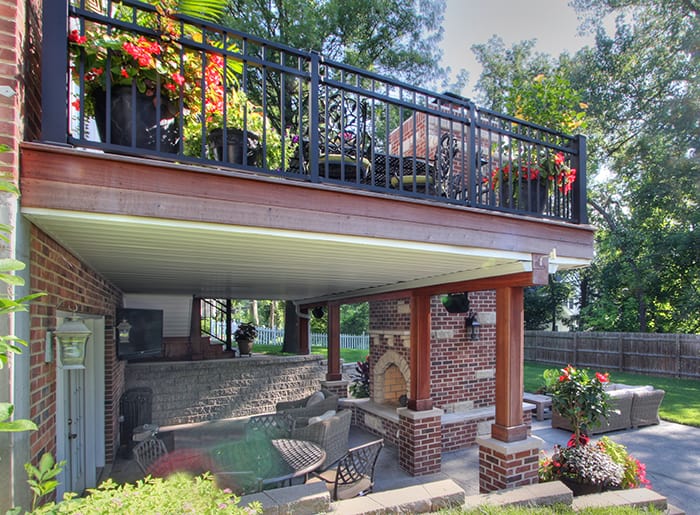
How to Create Your Perfect Patio

Thursday, June 9th, 2011

01 patio design How to Create Your Perfect Patio

The dictionary definition for patio is “an outdoor space for dining or recreation that adjoins a residence.” This basic understanding is needed because there are no boundaries when it comes to patio designs, but it all begins with a foundation for outdoor living.

02 patio design How to Create Your Perfect Patio

Form Follows Function

The first step in patio design is understanding what you want to accomplish. Do you only require a spot big enough for a table, chairs and BBQ grill for occasional outdoor dinners with those in your home? Or do you spend a large part of the summer entertaining large groups of people in your backyard? Or do you desire a quiet, shady spot for only you to get lost in a good book? Or do you want a patio wonderland that can do all of these things?  Knowing the patio’s function helps create the form.

03 patio design How to Create Your Perfect Patio

Where to Place It

Once you know your outdoor living goals, where to place the patio comes next. Pay attention to the sun and wind patterns in your backyard so they work to your advantage. For instance, if the time of day you would use the patio most is also when it’s sunniest, some form of patio cover could be a key part of the layout.

Also consider the scenery around the proposed patio. Is there already a focal point like gardens or woods that you’d like to gaze upon? If so, then orient the patio to lead the eye there. If the views beyond aren’t so great, the layout can incorporate privacy borders (such as fences or landscaping) to block views, and the focal point can become something like a water fountain or an outdoor kitchen.

04 patio design How to Create Your Perfect Patio

What Size Should It Be

The area that’s been determined as the best place to put a patio will also determine its size. If you have a large backyard, a rambling outdoor living room with multiple levels, seating and activity areas can be yours.  If, instead, you have a small courtyard or side yard area, then an intimate alfresco dining area would be ideal.

While a large area gives you a large list of options to incorporate, a small area does not necessarily limit your options; some of the very best design ideas come about because of limitations. For example, a 6-foot patio can center around a fire pit and be edged with half walls that also work as bench seating.

05 patio design How to Create Your Perfect Patio

What Features Are Desired

A simple slab of poured and stamped concrete outside your backdoor can be a straightforward plan. But if a gas grill, water feature or lighting is part of the design, provisions must be made for running and installing the appropriate utility lines. Installation of utility lines can also change the layout; for running water in an outdoor kitchen, it may be more advantageous to site it closer to the house to reduce the cost of plumbing lines.

06 patio design How to Create Your Perfect Patio

What Should It Look Like

When following the steps listed above, you will know the function, siting, size and features. The final step is what does it look like and what is it made of?

Here’s a quick primer on patio material choices.

At this point, designing your patio is exactly like designing a room in your house. You will consider materials, furniture, appliances, lighting and landscaping. A construction budget and schedule can now also happen. In essence, you are creating an outdoor room that – in the Metro St. Louis area – can easily be used 9 months out of the year, so all of this planning will result in a patio project done right the first time.

Because there are so many details that go into creating your perfect patio, you will benefit from working a design-build firm like Mosby Building Arts, who have Consultants, Planners and Carpenters under one roof. Browse their portfolio of outdoor living projects for inspiration, and begin your project by calling the Mosby office at 314.909.1800 or contact them here.

Choosing Patio Materials & Finishes

Thursday, June 2nd, 2011

01 pretty patio Choosing Patio Materials & Finishes

Whether you’re contemplating a new patio installation or upgrading the appearance of an existing one, it’s important to consider what type of patio materials and finishes will work best for you.

The cost of the patio material is only one consideration. Maintenance will be an on-going concern, which includes both the time you’re willing to dedicate and the expense of the maintenance. You may find that choosing a more durable patio material with less long-term care a much better up-front value than choosing a more cost-effective material that will not last as long and requires more of your maintenance time. Here is a summary of your choices:

Poured Concrete

A poured concrete patio is both affordable and easy to maintain. It also allows you to work in stages if you’d like an upgrade in the future because you can sometimes lay new materials over it.

02 stamped concrete Choosing Patio Materials & Finishes

Concrete offers many design options, as well. At the time it’s poured, it can be stamped or molded to replicate just about any look (brick, cut stone, cobblestone, etc.), or dyed to any color you like, or have a textured finish. All 3 of these options can happen at one time – let your imagination run wild! These cosmetic upgrades do not weaken concrete’s structural integrity but does change the project price.

Long-term maintenance for poured concrete can entail patching cracks due to the ground under the slab shifting or the expansion and contraction caused by the cycle of freezing and thawing common in the Midwest.

Pavers

Interlocking pieces of pre-cast concrete or clay (also known as brick) are called pavers or paving stones. They are installed over a compacted stone or sand base, or can be laid over many existing concrete slabs. The types of pavers to choose from include brick, concrete, natural stone and tile pavers.

03 brick pavers Choosing Patio Materials & Finishes

Brick or Concrete Pavers

Clay or brick pavers are a popular choice because they are easy to install, making them a Do-It-Yourself project. The pavers can be installed over sand or concrete bases without mortar, laid in an endless variety of patterns, and are durable in very cold climates.

If a paver goes bad, it is very easy to remove and replace the trouble spot. There is minimal maintenance to the pavers themselves, but weeds or grass growing up between them can be a maintenance issue.

04 stone paver Choosing Patio Materials & Finishes

Natural Stone Pavers

Flagstone, fieldstone and limestone are some of the most commonly used natural stone pavers. They are the most durable of all materials available, and do require skilled stone masons to piece together irregular stones and mortar them in place. This usually makes it an expensive choice upfront, but it lasts a long-time.

Natural stone veneer is a thinner and lighter version of full stones, so comes down in price a bit. It is recommended they be installed by skilled stonemasons.

On-going maintenance to natural stone pavers would be regularly sweeping and hosing down the stone surface to keep it free of garden debris. When properly laid, weeds do not grow up through stone pavers; instead, seeds atop the stone can take root in the porous stone.

05 Outdoor Patio Tile Choosing Patio Materials & Finishes

Tile Pavers

For a slightly more formal look, exterior-grade quarry or terra-cotta tiles are a great choice. You can have the look of stone without the additional expense of the labor involved in shaping and cutting natural stone.

To get the results you expect, go with a company knowledgeable about installing and mortaring them properly. And choose unglazed styles to avoid slipping on a slick surface when they get wet.  Tiles can crack if heavy objects are dropped on them, but a skilled professional should be able to replace only a broken piece.

Maintenance issues include sweeping and hosing down the tiles on a regular basis, and the possibility of re-grouting in the future due to weather-related deterioration.

06 mixed materials Choosing Patio Materials & Finishes

Your patio can be a combination of any of the above options. For example, a poured concrete patio can be edged with natural stone, or mix brick pavers with natural stone. This gives you endless design variety along with project budget flexibility.

To protect your patio investment, be sure to seal all concrete, brick and natural stone, as well as the expansion joints and grouting. Sealer prevents water from constantly penetrating the material, and helps it withstand the Midwest freeze/thaw cycles. Sealing also reduces staining on the surface, as well as making snow and ice easier to remove.

For help in choosing which type of patio works best for you, team with a Mosby Home Consultant who is well-versed in the installation, maintenance and cost of patio materials. Mosby Building Arts has two generations of skilled stonemasons on staff plus an expert sealing team, so you can be assured that from patio design to installation, you’re making the right choices that will last a lifetime. Call the Mosby office at 314.909.1800 or contact them here.

Explore Your Outdoor Living Options

Thursday, August 20th, 2009

mosby outdoor living 01 Explore Your Outdoor Living Options

Your home is much larger than you think.  We typically measure the square footage within the exterior walls of our house and consider only the interior as our livable space.  But when you look beyond the walls and consider the usable land your home sits on, the size of your home practically doubles in size.

A home is a place for your family, and the function of each room is determined by how the family uses the room.  For instance, the kitchen is for everyone of every age that lives in or visits your home, while your bedroom has specific functions for a limited number of people.  The family room is for varied levels of constant interaction, while a bathroom is for solitary retreat.  It is the number of people and how they use a space that creates the identity of a room.

Rethinking Your Backyard

mosby outdoor living 02 Explore Your Outdoor Living Options

Think of a typical backyard deck and how it is used.  Decks tend to be accessed by public spaces from inside the home and serve as an informal entertainment area for family and guests.  The deck has flexibility of use; yesterday it was a dining room for an intimate dinner for two, today it hosts a child’s birthday party and tomorrow it will let you relax and read a book on a lazy afternoon.  In essence, your deck is an outdoor extension of your family room, and a room addition without walls.

mosby outdoor living 03 Explore Your Outdoor Living Options

A patio may just be a slab of concrete in your backyard, but when you add a table and chairs, lighting and a grill it becomes the second kitchen of your home.  And just like your indoor kitchen, the patio is where everyone will gather, so furnish it the way you would a kitchen and you’ve just added another room to your house.

Endless Summer?

Outdoor living in, say, Southern California makes sense because of its year-round temperate weather, but why would you invest in creating outdoor rooms that can’t be used during Midwest winters?

Let’s observe that we in Metro St. Louis have a solid 4 months of cold weather that can preclude using a deck or sunporch, which leaves 8 months when our outdoor living spaces can be a part of daily life.

mosby outdoor living 04 Explore Your Outdoor Living Options

But even when the temperature is chillier than you’d like, patio designs can include fireplace accessories like a fire pit or fire ring to create warmth and cozy light for cold-weather get-togethers.  Another deck design option is various sizes of heaters powered by the same type of natural gas or propane tanks used for outdoor grills.

mosby outdoor living 05 Explore Your Outdoor Living Options

A 4-season room is essentially a screened porch with storm windows, insulation and a heat source for colder months, and when the weather changes, it converts back to an open-air room for enjoying nature in your outdoor room.  So, for those who thrive in the great outdoors, there are endless options for an endless summer all year long.

The designers and architects at Mosby Building Arts excel at creating unique outdoor living spaces perfectly tailored to your personality and lifestyle.  We work with you to craft a master plan of desires, needs and practical solutions that will transform your yard into an extension of your home, all year long.  To explore the possibilities of outdoor living, call our office at 314.909.1800 or contact us here.

.

Join the Mosby E-Newsletter to get monthly home tips & advice.    
Follow Mosby on YouTube   Follow Scott Mosby on Twitter I Have a Question
 
Consultation & Evaluation Design & Remodeling Update My Kitchen Update My Bathroom Scott Mosby Answers Questions ProTreat Sealing
 
Copyright © 2012 Mosby Building Arts, Ltd.   314-909-1800 • 645 Leffingwell Ave • St. Louis, MO 63122 | Sitemap